

Search Vehicle Records in Oklahoma by VIN
Whether you're buying a used car, checking a VIN, or preparing for a DMV visit, our tool helps you quickly access important information in Oklahoma, like vehicle records and driver information, all in one place.
OklahomaVehicle.org helps Oklahoma drivers make informed decisions about all aspects of owning or purchasing a new or used vehicle in the Sooner State.
Let’s dive into this more.
Your Trusted Guide to Oklahoma Vehicle Records
Going through the DMV's many options might be confusing for even the most experienced drivers, especially when purchasing a used vehicle, transferring ownership, or acquiring accident reports.
Drivers can save themselves the trouble of conducting independent research by using OklahomaVehicle.org. This reliable and user-friendly tool would be very helpful to any driver in Oklahoma. The website assists drivers in the Sooner State with major DMV-related issues.
OklahomaVehicle.org is especially helpful for:
DMV guidance: The website provides comprehensive directions on how to go about several DMV processes, such as record requests, vehicle registrations, license renewals, and title transfers.
Oklahoma-specific information: The website offers thorough guidelines that are relevant to Oklahoma's traffic laws, fines, and insurance requirements to assist you in keeping an impeccable driving record.
Time-saving insights: By providing you the information you need to ensure your application is accurate the first time, the website helps you avoid making unnecessary trips to the DMV. OklahomaVehicle.org makes it simple and quick to locate the required documents and processes.
Practical tips for drivers: The website also offers helpful information on how to report events, avoid common infractions, and other safety tips to help you stay safe while driving.
Drivers may monitor their vehicle compliance and drive more safely with OklahomaVehicle.org.
What Your Oklahoma Vehicle History Report Includes
By using your car's VIN to search for vehicle records, you can obtain a wealth of information from DMV databases, insurance records, and law enforcement records.
An Oklahoma vehicle history report typically consists of:
Title history: The information here is used to verify the vehicle's condition and who owns it. A car's condition and whether it has a branded title, such as "rebuilt" or "salvage," can be deduced from its title.
Registration history: This is used to check how registrations have changed over time.
Odometer readings: To prevent odometer fraud and mileage tampering, you can track the car's mileage over time.
Service and maintenance records: These can be used to demonstrate the quality of a car's maintenance. This will include information on both basic maintenance, such as an oil change, and major repairs.
Accident history: To ascertain the extent of necessary repairs and the level of damage, a list of recorded accidents will be provided.
Recalls: Any pending recalls are visible.
Theft reports: If the vehicle has been reported stolen or found, it will be displayed in the vehicle history check.
This kind of information can be quite helpful when purchasing a used car. By first learning about the vehicle's entire history, drivers may be able to avoid buying a car that could cause them problems down the road. Additionally, it helps reassure buyers that the vendor is being truthful about the condition of the vehicle.
Why Check Vehicle History in Oklahoma?
The Oklahoma used-car market is worth roughly $2 billion and employs over 4000 people; it is a vibrant part of Oklahoma’s economy. Given how profitable the used automobile market is, it makes sense that certain retailers would seek to close deals at all costs.
Therefore, it is essential to give the vehicle's history top priority when purchasing a used car. You must obtain the vehicle history record from the vendor to guard against fraud and make sure the vehicle you wish to purchase conforms with Oklahoma traffic laws. This paperwork also ensures that the car you receive will be in good shape.
The following factors make it essential to look into a car's history in Oklahoma:

Detecting problems
Knowing that “fine feathers do not make fine birds" is important when purchasing a used vehicle. From the exterior, the car may seem appealing, but it could be hiding damage that would cause serious problems for you down the line.
If you don't know what to look for, certain problems can go unnoticed, and if prior damage wasn't discovered during the sale, it might require costly repairs later on. Drivers must use considerable caution while shopping in used car markets, especially as the Oklahoma Lemon Law only covers used cars in certain edge cases.
You can look for vehicle records by VIN to find out more about a car's salvage titles, structural issues, and previous accidents. A simple inspection of the car may not reveal this information.

Verifying ownership
By verifying the chain of ownership, buyers and owners can prevent disputes over title transfers and illegal activities.

Avoiding fraud
Odometer fraud is becoming alarmingly more common, especially where used cars are involved. This fraud takes place when vendors alter the mileage to make the vehicles appear newer. According to a statistic quoted by Fox25, 2.1 million cars on American roads have had their odometers rolled back! A vehicle's history report may flag such discrepancies in mileage reporting.

Complying with Oklahoma DMV regulations
The DMV oversees ensuring everyone is safe on Oklahoma's highways. To ensure road safety and compliance, the DMV enforces registration and title regulations. For instance, Oklahoma demands that all vehicles have a current license and registration and that new young drivers complete the "Work Zone Safe" course.
How Does an Oklahoma VIN Report Work?
Every vehicle made since 1981 is given a Vehicle Identification Number (VIN). The car's manufacturer, year, make, model, location of origin, and engine specifications can all be found in the 17-digit VIN.
A VIN is essentially the car’s personal identification profile. It helps purchasers and owners understand the history of their vehicle. Typically, the VIN consists of both letters and numbers. However, each digit contains precise information about the vehicle.
Every VIN is structured into three sections:
The manufacturer identifier: identifies the country and manufacturer
The vehicle descriptor: describes the body, model, and engine type
The vehicle identifier: provides the production and serial information
Here's how the search process works on the site:
1. Find your VIN
Find the 17-digit VIN on the vehicle's registration documents or use the guide below.
2. Enter the VIN into the search tool
Enter the VIN on OklahomaVehicle.org’s VIN lookup tool on the homepage
3. The website scans official databases
The search will compile a vehicle history report from DMV records, police reports, and insurance databases.
4. Receive the report
Your vehicle history report will be ready within moments with reliable results you can trust.
The report will include:
Title History
Records
Readings
Readings
Information
Inspection History
A VIN report can assist vendors, buyers, and owners in making well-informed choices and steering clear of any potential legal problems or hidden risks. Drivers can rest easy knowing that the history of their car has been confirmed using OklahomaVehicle.org.
How to Find the Vehicle's VIN Number?
It is quite easy to find the VIN on your car. You can find the VIN in the following places:
The dashboard from the driver's side via the windshield. This is the most likely place you will find it.
The inside door frame on the driver's side.
Amongst official documents, such as the title and registration documents
In insurance documents. The VIN is usually included on auto insurance cards and policy documents.
The owner's manual and maintenance records for some older models may also show the VIN.
Front of the engine block. Examine the engine block by opening the hood; for security reasons, many manufacturers stamp the VIN into the metal.
Oklahoma Vehicle Statistics
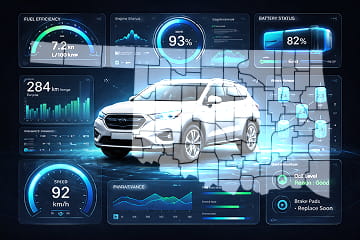
There are over 4.62 million vehicles on Oklahoma roads, with about 500 new vehicles added annually. By kinds of powertrains, the vehicles running on the state’s highways are dominated by internal combustion and hybrid engine cars, which account for 98.7%. Others are as follows:
- Electric (0.50%)
- Plug-In Hybrid (0.80%)
- Fuel Cell (0.00%)
Based on upfront cost, Oklahoma is a top state thanks to its lower dealership markups and very competitive pre-owned vehicle market.
Top-selling used cars in Oklahoma include the Jeep Wrangler, Jeep Cherokee, Ford Explorer, Toyota, and Tacoma.
Currently, the Sooner State's used car dealers industry has a market size valued at $2.0 billion. There are 2,114 used car dealers in the state.
The Sooner State has 94 cars per 100 people.
FAQ
Do All Vehicles Have a VIN?
Yes, the National Highway Traffic Safety Administration (NHTSA) enforces that all vehicles from 1981 onwards have a VIN.
What specific details does the VIN report reveal about accidents?
The VIN can reveal the vehicle's free accident records. The report includes data on the type of accident, the date, the location, and the severity of the damage. The report can also share the title brands and whether the insurer has written the car off.
Does the report show who the previous owner was?
Because of privacy laws, a standard Oklahoma Vehicle History Report will not show the name of the previous owner. But it will show the number of previous vehicle owners. For official ownership records, you check your own title online via OkCARS, while others need to use the OTC portal or mail in forms for title history.
Do I need the VIN or the license plate number to run a search?
Yes, both the VIN and the license plate number are unique identifiers. You can use both, but some services will require the VIN for more detailed vehicle history reports.
How long does it take to receive the full vehicle history report?
When using OklahomaVehicle.org, you’ll receive the full vehicle history report instantly.
What if the VIN or Plate I enter shows no records?
This can happen for a number of reasons, like errors in entering the correct VIN or a system error with the database. It’s recommended that you check you have entered the VIN correctly.